Neapolitan Perspective on Italian Education
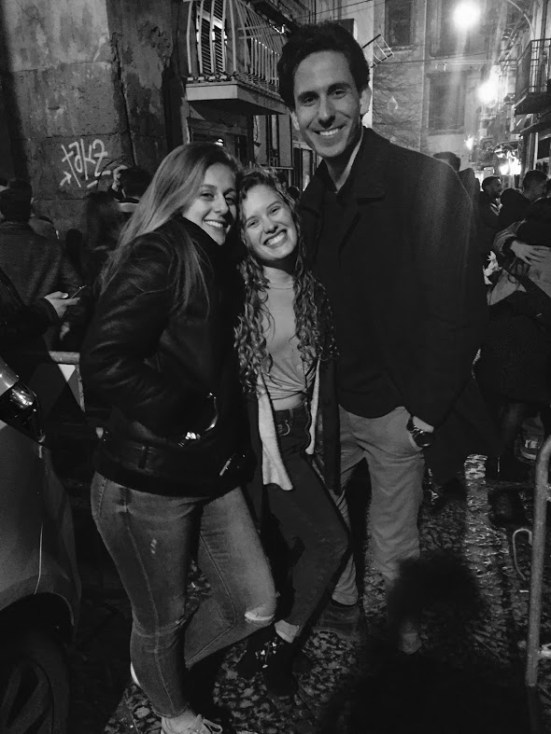
Simona, Myself, & Alessandro in Naples, Italy
As a proud Italian, Simona Pinelli reflects on the many years she spent at public schools within Naples, Italy. From touching on the organization of Italian education to personal stories of crying during exams (don’t we all?), Simona offers a heartfelt perspective into the life of a young and motivated student. As her former English teacher (for a mere two months), it is clear that Simona possess a passion for learning and language.
The perspective of Alessandro Fioretto, born and raised in Napoli, is also shared. His opinion was added to share an additional perspective, although he mentioned that he fully agreed with Simona’s commentary. Having known “Ale” for several years, I can attest to the fact that he is an extremely smart and driven individual, studying medicine and surgery at Luigi Vanvitelli University of Medicine and Surgery in Napoli.
The following text is an edited transcript:
Ciao Simona! As you remember, I taught English at your high school in the Fall of 2015. This school, Liceo Antonio Genovesi, is a high school under the category of “Liceo Classico” (Classical High School). Can you explain the categories of educational institutions within Italy?
Simona: The Italian school system is in four phases; Scuola dell’Infanzia/Scuola Materna (AKA kindergarten), and the student does not have to attend. This stage is until the child is five years old. After kindergarten, school is compulsory. Next is Scuola Primaria/Scuola Elementare (elementary school), where you attend for 5 years. Here the kids study math, Italian, geography, history, and English (starting foreign languages at 6 years old). After elementary, student attends three years of Scuola Media (middle school). At this point, students usually attend a school building that is different than their elementary school, but it does not matter much because all the middle schools teach the same lessons. At the end of middle school, students are given an exam. It is important to mention this exam because all students must take it!
This exam is called “Esame di Terza Media”, or “the exam that is due at the end of middle school”. The grades go from 0-10. I received a 10 of course (Simona says, smiling and joking around), but it doesn’t matter if you got 9 or 6, you will go to high school.
So, if you receive a 5 or worse you don’t go to high school?
Simona: Yes, but I don’t know anyone who has failed it. I remember (this test) was the first big event of stress in my life. You have to choose a topic you studied in every subject and then present it. For example, I talked about the art piece “The Scream” (by Edvard Munch) for my art exam. The teachers required that I re-make the painting and explain the technique, why the artist used the colors that he did, that sort of thing.
Now I remember, I cried in my oral-exam during middle school. It’s not that certain subjects are more difficult or important, but history and Italian are the base classes that I enjoyed. My history teacher said, “tell me about this” and I instantly started crying. But she knew me and said, “It’s okay, let’s restart”. And then it was okay!
For most kids’ the middle school exam is the first time they have that type of important test. It depends if you are an emotional person or not, and a lot of kids pass it. Before the end of the school year they tell you your grades are not good, then they will make you re-take the year instead of taking the exam.
Actually, I even cried at my high school exam, I think I am a mess. But I still haven’t cried at my university exams, so I think I’m growing up (she says laughing). I like with the high school exams that students in the year below us will enter the classroom to watch and get an idea to see what the exam is like, so they can prepare for the next year. People at university do this too.
“Liceo Genovesi”, where you attended, is a “classical” high school. Can you further explain the organization and differences between Italian high schools?
Simona: I know in America you can choose different subjects and classes, but in Italy the schools are in big groups. My high school is a “classical” high school. This means the students study subjects like Greek and Latin. Whereas in different high schools, like in the scientific schools, students study maths and physics. Linguistic schools are where students study languages (German, English, and French). There are many different types of schools. The classic was the first high school system created in Italy, then the scientific, now there are a lot. For example, there are now technical schools, or “Istituti Tecnici”.
It is interesting students have so much power in choosing the type of high school they attend. What is the process of choosing which high school a student might go to?
Simona: Well, (choosing) depends on your interests. The reason I chose the classic one is because it was the more “open minded”. A school where students can do different things without being specific; I can study many things. I can still study (a range of subjects) like math and chemistry, English, as well as philosophy. It is more “complete” than the others, in my opinion.
Also, the application process depends on the year. For example, in my high school there was a period (6-7 years ago) when everyone wanted to go there. So, they could only choose those who applied first.
In this process, Italian high schools do not turn away students because of low grades. They simply accept the first applicants to said school.
Considering your country is home of the Vatican, many view Italy as a highly Catholic country. Do you see religion reflected in the school systems?
Simona: Italy is not a secular country. Most of us are catholic of course. So, we have religious symbols represented in schools. There are crosses in the school, for example. This is an issue now because there are many immigrants from other religions and they practice other religions. It’s not right, but our government now is very bad because they don’t really value other religions. You know how history repeats? It is the same as the second world war; it is really creepy and disgusting. But this is a conversation for another time!
We have a subject of religion. Here in Italy we are expected study different religions, but my teacher never ever did anything about religion… we never studied it, but we were expected to. Religion is not a subject that you have an exam for. It would have been nice to learn to respect the other religions. But, it is not like we are praying in school or anything.
Looking back to my time at Genovese, I remember being surprised that I had to move from class to class, as students stay in the same classroom all day and the teachers change classes and move to the students. Based off your studies of American culture, can you think of any big differentiations between American and Italian education?
Simona: Something I know that is different is that the US cares a lot about sports and those activities. The students in the United States play sports during school time. We do too, but no so much.
Also, we don’t have clubs, but we have after school activities… But, it is not the same as in the American school activities. For example, we have English activities course, but it is a course, a class. It is an advance group that is about learning English and speaking. It is fun, but normally they do this more in middle school. If there are clubs, like photography, they are in middle school because there is more time for students.
One other difference is that everyone goes home for lunch. Because the school day ends mid-day (1pm), this is before lunch time. So, everyone goes home to eat with their families.
Alessandro: After visiting America and having the luck to experience a different culture (even though it was short and during the summertime), the first thing I noticed was that the American way of living and the education are more focused, rather the Italian one, on the “achievement” of autonomy in the everyday life. I was really impressed by the fact that almost all the guys I met were able to find a job during their summer free time and also be autonomous under this point of view. Well, I can’t say that in Italy this process doesn’t happen at all, many people during their adolescence manage to find a “little” job to raise some money for themselves, but it certainly depends on many factors and it’s not as common as I saw visiting the U.S.
Anyways, that’s only an example, but I think that it represents a big difference that is strongly reflected in the American school system.
In Italy, the high school system in general is organized in different school addresses and each one of these is characterized by a different focus on the fundamental subjects (Italian grammar and literature, math, physics, Latin, history, philosophy, English etc…) and by some specific subjects, depending on the school address, like Greek, economics or another foreign language.
In the U.S, I noticed a more general way of approaching the studies with an opportunity to define them during the years of school. The U.S school seems like an organization that makes it possible to learn the best and to apply it at school, rather than in Italy where the half of the learning work often is given to be completed at home.
I consider the Italian school system really efficient in the process of learning and extending the cultural baggage of each student, but referring to the autonomy aim that I mentioned before talking about my experience in the U.S, I can totally say that the U.S school time is made to be an isolated moment of learning, which makes it possible to have the opportunity to define a parallel moment of the day to find autonomy and a role/identity in the everyday life.
Finally, I want to bring up the close relationships that I noticed between students and teachers in Napoli; I remember during one class a teacher asked how the students viewed the loss of virginity. The novel we were reading as a class mentioned a woman who had lost her virginity before marriage and was chastised by her community. The teacher asked the class if they agreed with the events in the book; he even went on to ask the boys in the class if they preferred or cared if a girl they were dating was a virgin or not. I was struck with how open and unembarrassed the class was, they seemed to have no problem in talking about such a personal subject with their older, male teacher. I also remember the teachers tended to know the family life of every student, which students were dating each other, and even where students lived. Can you speak to this observation at all?
Simona: Of course, there are boundaries, but asking personal things in general, it is okay. We do not talk about this closeness on a daily basis, but if we are talking about this sort of thing in English it is okay, it is not creepy. I can tell you the relationship with the teacher is so close, that they will tell the teacher, a girl will tell a teacher when she has been mistreated by a guy. My class was very close with one teacher, and years later we are still in touch with her. We even have a WhatsApp group with her!
Alessandro: About the relationships with the teachers, I totally with Simona. We have a WhatsApp group with one of our teachers too (he says laughing). The fact is that we are always not so close with them, but sometimes it happens. Usually in Italy there’s a big difference of age between students and teachers. But in my case, it happened that our class had a teacher that was doing her first year of teaching, so she got pretty close to us. Also, I have my Italian teacher on Facebook (he starts laughing again), but it only happened after the school year.
 Empathetic Education