Perspective on Japanese Culture & Education
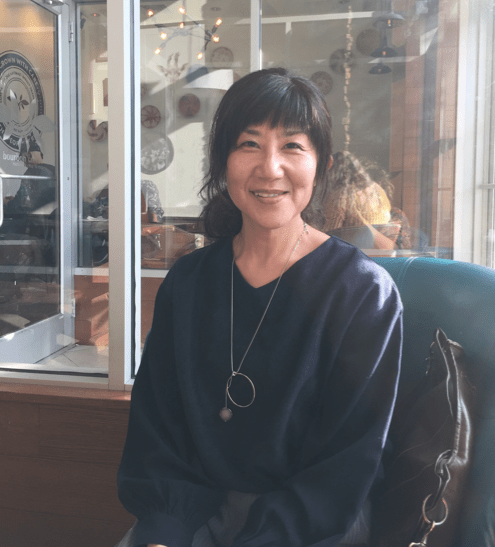
Professor Kazuyo Kubo, Lesley University
After taking her Honors Immigration course last Fall, I was honored to interview Kazuyo Kubo, an Associate Professor at Lesley University. Kazuyo (as she is called by her students and colleagues alike) moved to the U.S when she turned 20 to study Eastern Asian Studies at the University of Minnesota. Since then Kazuyo has lived in the U.S, but originally she was born and raised in Osaka, Japan. The following edited transcript gives insight into Kazuyo’s perspective after experiencing both Japanese and American education first hand.
A glance of education organization within Japan:
For one, education is compulsory for all Japanese youth until the 9thgrade.
- Elementary School = Six years
- Junior High School = Three years
- Senior High School = Three Years
- College, Kazuyo said directly translates to “Short term college” = Two years
- Four Year College
Kazuyo! I am thrilled to have you here and to share your life perspective when it comes to education, thank you again for coming. I wanted to start off by noting that in certain cultures that I have directly observed, teachers are very casual and familiar with students. When you were growing up in Japan, was there a way that teachers tended to interact with students? For example, was it always professional or more personal? What was the relationship like between students and teachers?
Well, it has been several years, so I don’t know exactly how things are going now in Japan with education except from my observations with my young niece. Maybe it is good to mention, I have experience in teaching Kindergarten in Japan, just for a year or so.
That’s lovely! Since I had you as a professor I had no idea you used to teach younger kids like those in Kindergarten.
Oh yes, back when I was 19 or 20 or so, but it was very hard (she says laughing), which is why I ended up quitting. Anyways, there is this type of hierarchical relationship, where your teachers are alwaysabove you. You know, students always refer to teachers as they might a teacher here, with “Mrs. Kubo”, but in Japan it is a little different. The students in Japan say, “Kubo Sensei”. Sensei, the title, comes after your last name it is an honorable way of addressing your teacher. In this way, teachers have their own titles. As a teacher, when you talk to your student’s parents, obviously they are older than you are. But they still call you “Kubo Sensei”, which is very polite. Like when I was a teacher, I was just a kid, basically right? I was 20!
You don’t believe this age difference made an impact on the respect because of the title?
No, even if maybe they are thinking “Oh wow, this teacher is so young”, this respect is the type of thinking. Even though there is this respect and the mannerism thing, this doesn’t mean that teachers do not know a lot about the student and their lives. For example, teachers are expected to visit students’ homes. Yes, I think this is still the case in Japan today. Either way, when I was a student, every year there was a formalized visit. The parents and the teacher would establish a time during one day of the school year.
Would families have the teacher over for coffee or tea in their own homes?
I believe yes, they used to, but the time commitment became too much for teachers. So, when I was younger, it was more like a 10-minute visit in the front of the home, usually the teachers wouldn’t go too far into the back of the house because it could be seen as too intrusive. As a teacher I can very much remember doing this sort of 10-minute visit.
During the visit, the parent would share how the child is doing at home. This was also a time for parents to tell of their concerns about their child.
Do the parents ever go to the school for a meeting as well?
Yes, so this visit to home is more of a routine for teachers. The meeting and requirements would go both ways.
That is so interesting, because in the U.S teachers used to visit student homes as well, but over time these visits became too much of an over-commitment and the visit even became dangerous for some teachers. But I agree with you, I think this sort of relationship building is a great experience.
Anyways, since we have been talking about your personal experiences, do you have any vivid memories from your educational days in Japan?
Oh yes… when I received a zero score on my math exam (she says laughing). I was a third grader. It is sort of funny now, because there was this boy who was giving me a hard time. He would not bully, but sort of pick-on me and so I kind of hated him. But, I would respond and sort of pick-on him too, so it went both ways. One time, our teacher asked this boy to hand back math exams. It is so unethical! But this boy found out I got a zero and (she starts laughing) gave me this sort of face… (Kazuyo makes a face that looks as though she is mocking me, imitating her old classmate). But oh yes, it is funny now, but it wasn’t then. Let’s see… something else I remember…
As Kazuyo is thinking, I prompt her further by asking if there was something routine in her day that might be unique to her education within Japan
Well, I think this may be very specific to how schools are run in Japan, but the school lunch, especially in elementary school, is very unique. Each student must pay a certain amount per month, although I’m sure the school subsites some of these meals for some families. This is done differently from school district to school district, but when I was younger we had a vendor who would bring the lunches on carts to the school. The students have the responsibility to serve the lunch to the rest of their class. Five or six students per classroom have this responsibility. They wear the white apron, white hat, white mask, and then they go to receive the cart of food. So, there would be bread, or rice, and some staple foods like curry sauce, meat, side dishes, milk, all of these things.
The rest of the students would move the tables and set up the place-mats to eat on. Finally, the five or six students would be at the front of the classroom and line up, and the others would come up to them to receive their lunch.
Oh, well I have another side story… the milk they served when I was young was given in big glass containers. Some kids just hated milk, maybe it was the taste or even an allergy. But back in my time, 25 plus years ago, the teachers expected all the students to finish whatever had been served. If the teachers did this now, they would be in trouble (for forcing kids to finish their meals and milk). Because the milk was glass, the teachers would use permanent marker to say “ok, drink up until this line today”. But I would feel so bad for the student. Right after lunch, students would go off and clean then play. But if students couldn’t finish the milk, they were forced to just sit at the desk while everyone else had fun. I don’t know if it was punishment, but it definitely felt like that. So yes, there was this communal experience of eating, but kids would also be left behind and forced to do something they didn’t want to.
When you moved to the U.S, is there anything culturally and or educationally that surprised you?
When I first moved to the U.S, I stayed with a host family who had one college student who lived away and one daughter in high school. I found it striking that students would have different starting times. So, some students would start class at 8:00, but others would start at 9:00 all at the same school. To me, it seemed more like high school students had college experiences. Like, they could choose some of their own classes whereas in Japan we would stay in the same classroom all day and the teachers would come to us. Students might move for a specific class, like gym class or art class, but it is because there was a specific reason or specific space for that course. Because we spent so much time with the same class, we had such strong identities with our homerooms.
I read that there is one calendar day in Japan where all seniors in high-school take the college entry exam, and each college has a certain threshold for scores that the student must get to apply and attend. It mentioned how this day is very high-stakes and stressful for the students.
Yes, this is true. Also, all the difficult courses a student might take in high school are taken for that purpose… students don’t take the harder classes for transfer credits to college. I am not sure how they are now, but we did not have AP courses. From my time in school to present day, there is a lotof pressure on students to study hard so that they can pass the entrance exam. Many go to an after-school cram school to get extra support for this exam.
What would you say priorities are in Japanese education? For example, when we talked about the cleaning and the tasks of the students, I’ve read the school administrators hope these tasks teach responsibility and create a sense of community for their students.
That’s a good concept for me to reflect on. I mean, even the purpose of the cleaning and helping feed your classmates… the people say this is to cultivate community, like they aim to in the U.S as well. I hear this said lot, and I don’t know if I agree, but many say that Japanese education has a focus on the group and group identity, instead of cultivating the individual personality and individuality. There is more of group identity… like the school lunch and eating together is one example.
I don’t like over emphasizing this point too much because maybe I am seeing the outcomes; for example, the cleaning is done by the students instead of asking custodial workers. Yes, the purpose is to do things to raise group responsibilities, to make your whole school clean but all the students behave differently after they graduate, even outside of the classroom. It’s a good idea, but I don’t think all the students actually do this type of behavior when on their own. The behaviors don’t always transcend to the afterwards. Yet, at the same time, Japanese people want to describe themselves as overly positive, so I remember during the soccer world cup this past summer Japan qualified and made it to the games. There was one whole section where all the Japanese fans sat. I remember an American news person commented how all of the Japanese spectators cleaned up and took their own garbage. Because yes, they did that I understand, but those Japanese people know “(cleanliness and being polite) is what we are known for”. So, I wouldn’t say that always transcends to real life and public space, maybe only when it is expected. Yes, the sense of community is a factor, but just because it is done it is easier for people to emphasize it and characterize Japanese students in this way.
Is there anything you think the U.S School system could learn from Japan and vice versa?
Well, perhaps students in the U.S can clean up after their own classrooms instead of hiring custodians (she says with a hint of sarcasm). But, I would say more that Japan can learn from the U.S, I want to make sure I specify that during my time (the 70s and 80s), there was an emphasis on memorization in school. It was very surface level and structured in a way that doesn’t allow students to ask questions or wonder. For example, a textbook in 6thgrade stated how Japan “went” to South Korea, instead of saying Japan invadedSouth Korea. But that is how we memorized it… we memorized certain words. My peers never questioned the terminology, and I was so naive I never even had those questions in mind. So, I would say there was limited space for students to explore back during my time in school. But when I talk to teachers now, I think those teachers are more aware about these types of things. and are exploring ways of teaching.
Thank you Kazuyo, it’s been an absolute pleasure.
 Empathetic Education