Perspective on authors who write about disabilities when they don’t have them themselves.
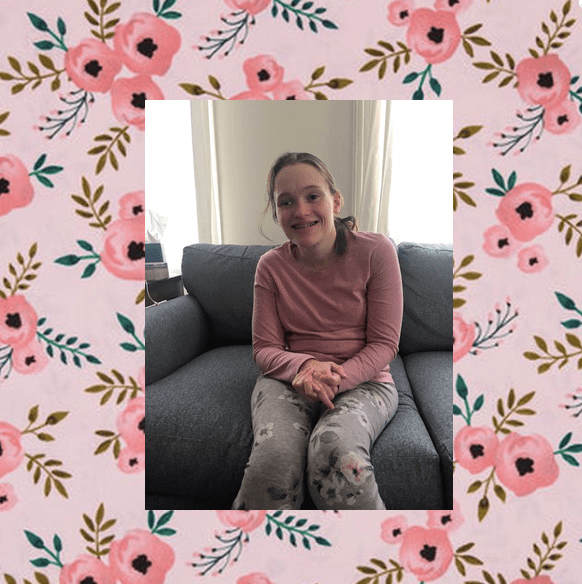
Sophie Korpecs, a Junior at the University of Massachusetts Amherst, studying Public Policy with a concentration in Disability Policy
In the past couple of years, the discussion around writers telling narratives of minorities, and then profiting off of it, has been in the spotlight. If you’re interested, check out this article and this article for more background information.
In a course titled “Young Adult Literature” this past semester at Lesley University, our class read the YA novel “Stuck in Neutral” by Terry Trueman. This novel is about a 14-year-old boy named Shawn, who happens to have Cerebral Palsy (CP). Within the first chapter of this novel, Shawn states, “I am pretty sure that my dad is planning to kill me. The good news is that he’d be doing this out of his love for me” (p.12). Misunderstanding and pity towards Shawn are central themes of this YA novel, but that isn’t all. Throughout the novel, Shawn talks about his friends with disabilities using derogatory terms, and the author has Shawn talking mostly about his disability in leu of his own interests, “I’m pretty sure I’m the only secret genius in our group. Pretty sure… It probably sounds like I think I’ better than the other retards” (p. 41). After reading the novel, it was no surprise to me that the author himself does not have a disability, but I was angry to learn that his own son has CP, and Truman has been quoted as saying the plot closely mirrors his own life. I was immediately troubled, thinking that thousands of young people have read this novel and learned about CP from someone who doesn’t have the disability themselves. Although I took offense to the writing and was concerned about its message, I wanted to talk with one of my closest friends, Sophie Korpics, who has CP herself. Since meeting in middle school, Sophie has shown everyone in the Newburyport community that she is a brilliant and determined individual. From acting in nearly all of the school’s plays and musicals, to making the honor roll, Sophie is an inspiration to everyone she meets. I gave Sophie a synopsis of the novel, as well as some quotes, to get her input on the YA novel “Stuck in Neutral”.
The following is an edited transcript with Sophie (my questions/comments are in bold with her responses beneath):
Hey Sophie, thanks for agreeing to give me your perspective. Is there anything you would like to say off the batt after hearing about “Stuck in Neutral”?
I feel until somebody actually knows what being disabled is really like, then they’ll be ignorant. And I feel like, if the author was really interested in writing a book about somebody with CP, then he should have done much more research. He should have talked to somebody with first-hand experience.
Well, the thing with this author that was most challenging for me was that based off the language I assumed this person must have never met anyone with CP. I was so irritated by the writing I researched the author and learned that his own son has CP! But, the writer’s son also has developmental delays and is currently unable to communicate with those around him. So, the author could never ask or hear his son’s opinion on the matter. It seems to me the only person this author has ever met with CP is his son… ultimately, he generalized.
Yes, and what a lot of people don’t realize is that CP can affect people in all different ways. For example, there is that case where people with CP have difficulty with communication because they’re mentally affected. But sometimes, like in my case, I am completely fine mentally. A lot of people, when they first meet me and if they don’t know me, are surprised by how smart and sharp and witty I am (side note, it is true Sophie is all of these things and more). Like I said, CP affects people in all different ways and it doesn’t mean you’re mentally affected.
I know you are a theater fanatic, and this question sort of involves theater as well as CP and disabilities. You know how there is that conversation about who has the right to play a certain part in a theater production? Like, when a white woman plays the part of a woman of color. I want to ask with writing, who do you think has the right to write from the perspective of someone with a disability, or someone with CP, or in general someone they cannot personally relate to.
I would say, in terms of theater, I am not against someone without a disability portraying a person with a disability. As long as that person is portrayed in a way that doesn’t give off the message that people with disabilities should feel sorry for themselves or give off the message that if you have a disability your whole life is over. I do feel there should be more opportunities for those who are different to act (or write). Have you heard of the TV show Speechless?
Yes! I have watched it, I thought it was great!
Yes, well that show is about a family with the eldest son who has CP. He cannot talk on his own, so he uses a communication board. I loved how it showed that CP can affect families in different ways. Like, the Mini Driver (the mother) character was really overprotective of her son. I know that this overprotectiveness is very common in families with CP. In my experience, parents can either be like “Go for it! You can do anything you want. You can go off to college and do things on your own”. Or, you can have a parent that is like the Mini Driver character where she is like, “Okay, you’re disabled, I’m never letting you out of my sight”. It seemed very authentic that the show addressed that kind of parent.
Another thing I love that they addressed was, well, you may have noticed this more if you’ve ever used a wheelchair. But have you ever pulled into a parking lot and all of the handicapped spots are taken?
Yes, I’ve definitely noticed it before.
Well, I’ve noticed that sometimes, not all the time and not all people, but my Mom and I have seen a person pull up to a handicapped spot and, well, they’ll pull out a placard and use the spot. I’m thinking of one time when a woman used the handicap placard on her car and then she sprinted out of her car. My mom and I were like, “If you’re able to sprint, clearly you don’t need a handicapped spot”. Whenever you have a system like that in place, there will be a small handful of people who abuse it. I know some people become injured and then get a temporary handicap placard but continue to use it to get a good parking space even after they don’t need it.
Thinking back to the show Speechless, do you like the main actor in that show? The show overall?
Yes, I think shows like Speechless are really good, but there are some episodes I don’t like so much. See, in the beginning of the show the character with CP gets a new aid. My grandma told me there is one episode where the family discovers the aide was taking advantage of getting free parking spaces and getting primo-seats to baseball games and such. In the end, the aide said, “I’m sorry for taking advantage of your situation, I’ve just never been treated so royally before”. In my experience, this sort of thing never happens. All of the aides I have had and all the people I have had helping me throughout my lifetime are really there to help me.
In this book I’ve mentioned, “Stuck in Neutral”, the main 14-year old character with CP talks about other kids in his classroom by making fun of them, viewing them and stupid and calling them the R-word. He really seems to be bringing down all the other students in his class and people in his community who are also disabled.
Oh, wow.
As you know, at NHS (Newburyport High School) I was really close with our friends in the Special Education department, and no one ever talked in that manner or really brought each other down by making fun of other classmates’ intelligence levels. Can you speak to the CP community at all, and if you see anything like this?
As you know, I would never talk down on other people. The only reason I can think of for a person with CP acting like that is because they feel stuck in their situation and they don’t know how to deal with it. I know some people, when they get angry, rather than dealing with it in a rational way they choose to take their anger out on the rest of the world. I feel like there is no point in getting angry. I feel like all you can do is make the very best out of every day and make do with what you have. I’ve always found that yeah, maybe I can’t walk all that great, but I have still found many ways to make myself happy. I feel like I’ve definitely found ways to feel satisfaction in my life. Again, a lot of people, when they hear they’ve been diagnosed with a disability, they want to give up. My mom told me when I was first diagnosed with CP at the age of two, her immediate thought was that I was going to be in a wheelchair for the rest of my life. On the way home after my diagnosis, she immediately started thinking about every possible thing I would never be able to do. But, look at me now! (Sophie smiles). I was able to get really good grades in high school, and now I am at a really good college (UMass Amherst).
You also do many jobs and advocacy work that you feel deeply about.
Yes, and that is something that a lot of people don’t realize. You can make things like school work, you just need to make sure the child has the supports they need at all times. For me, the key to living a full life has been all about making it work. A great example is Mr. P. (Mike Pirollo). He told my mom that when he first met me, he looked at me and wondered, “How am I going to make this work?” I have loved that every production I was in (at the middle school), he found a way to assign me a role. My main concern when joining the theater program was that I would have to do rehearsals every day. Hearing this, Mr. P was like, “She doesn’t have to do rehearsals every single day. I am happy to have her anyway she can participate”. I remember the first year I did the musical, and he even let me take one night off from the show to save my stamina. I’ll always love him for that, because he could have very easily said, “This isn’t going to work, I’m sorry I can’t help you.” But he didn’t, and I was able to do what I loved. Sometimes, it was the same with school. Like sometimes we didn’t know how to go about certain things, but luckily somebody in the Newburyport school system was always able to work with me.
True, but I think that’s because you are an easy person to work alongside with, you put so much passion and care into the things you do.
Yes, and I feel that a lot of the people who work with me see that things like school, I am not willing to give up. I find that when it comes to things like school, even if certain aspects are hard for me, if I show I am not going to give up then they are not going to give up on me. I guess my main point is that if you’re not willing to give up on yourself, then others won’t give up on you. There’s no point in getting angry about circumstances you can’t control. Going back to the novel you mentioned, maybe the author saw that his son was angry all the time, or couldn’t talk to him, and assumed that all disabled people are like that.
When I was reading this book, the author painted the boy, Shawn, in a light where he didn’t have any passions or care for living. I find that to be the complete opposite of those I know in the CP community, like you, or those in the broader community who have disabilities. You know?
Exactly. Often times, I notice that when people paint disabled people like that, they’re trying to make the audience feel sorry. I feel like that just doesn’t help anybody. I mean, I know I wouldn’t want everyone going around feeling sorry for me.
I don’t think you need sympathies, I mean you were just explaining to me you’re getting your master’s in public policy with a concentration in disability policy, you’re doing extremely well in school, you love what you’re doing, you have your friend and family… you’re just living your normal and best life, which is great.
Yes, and I feel like that has been my normal for many, many years.
I would love to close off with one final question. You mentioned those authors may be looking for sympathy from people. So, when people are learning about the CP community or thinking about people who have disabilities, what is a better lens than that of sympathy?
I definitely think empathy is better. I believe “Stuck in Neutral” would have probably been much better if the author had painted the character in a way… I feel almost like, and correct me if I’m wrong, but this author was saying that the character’s entire life is defied by their disability.
I would say that is an accurate statement, as almost all of the conversation resolves his CP.
If I was writing a book about someone with CP, I would paint the character as someone’s passions, or explaining some of the challenges of that person’s daily life. For example, I would say, “This morning, my best friend Caroline texted me and asked if I wanted to go get a cup of coffee, and I took my adaptive van there to the cafe, but when I arrived there were no handicap accessible spots.”
So, you would write about your daily life and your relationships and interest, but add in any unique differences or difficulties that come along with CP.
Yes, exactly.
It seems to me you would put the person before anything.
I feel like writing a book in this way would open a lot of people’s eyes to the challenges that come along with having a disability. But, it would also make it a lot more relatable to someone without a disability, because I feel like almost everybody has been in a situation where they want to go somewhere or want to go somewhere, and nothing goes as planned.
That’s a good point, everyone deals with challenges and difficulties, sort of like that saying, “We are more alike than different.” I think that’s it, anything else you want to add?
No, thank you!
As Sophie said, empathy is of the utmost importance when learning about people from all walks of life. I encourage those who read this, and specifically “Stuck in Neutral”, to not shy away from the conversation about who has the right to write from a perspective that is not their own. This conversation is especially valuable in classrooms, where students like Sophie may be outnumbered yet equally deserving of a voice and accurate portrayal of perspective.
Shoutout to Sophie who let me interview her and articulated her thoughts so well (per usual).
 Empathetic Education
Great piece (and sorry you were assigned a lousy book). If you don’t already know it, there’s a great resource blog — Disability in Kidlit — that highlights books with good representation. Take a look (and maybe share it with your professor). http://disabilityinkidlit.com/honor-roll/
LikeLike
This is so great! Thank you for sharing this story 🙂
LikeLike